
WASHINGTON — A Senate spending bill would restore funding for dozens of NASA science missions threatened with cancellation in the administration’s 2026 budget request but is silent on one flagship program.
The Senate Appropriations Committee released July 18 the report accompanying its commerce, justice and science (CJS) spending bill for fiscal year 2026 that the committee approved on a 19-10 vote a day earlier. That bill included $24.9 billion for NASA, slightly more than the $24.838 billion that the agency received in 2025 and far more than the $18.8 billion proposed by the White House in May.
The bill includes $7.3 billion for NASA science programs, approximately the same that the agency received in 2025. The White House proposal, by contrast, requested just $3.9 billion for science programs.
“The Committee rejects the mission terminations proposed in the fiscal year 2026 budget request for Earth Science, Planetary Science, Astrophysics, and Heliophysics,” the report stated. “The Committee is concerned by the plan to end 55 missions across Science, which was driven by budget pressure rather than scientific value.”
Those cancellations included missions in their extended mission phases as well as those still in development. The committee stated in the report that “mission cancellations without clear justifications may hinder scientific progress and U.S. leadership in space.”
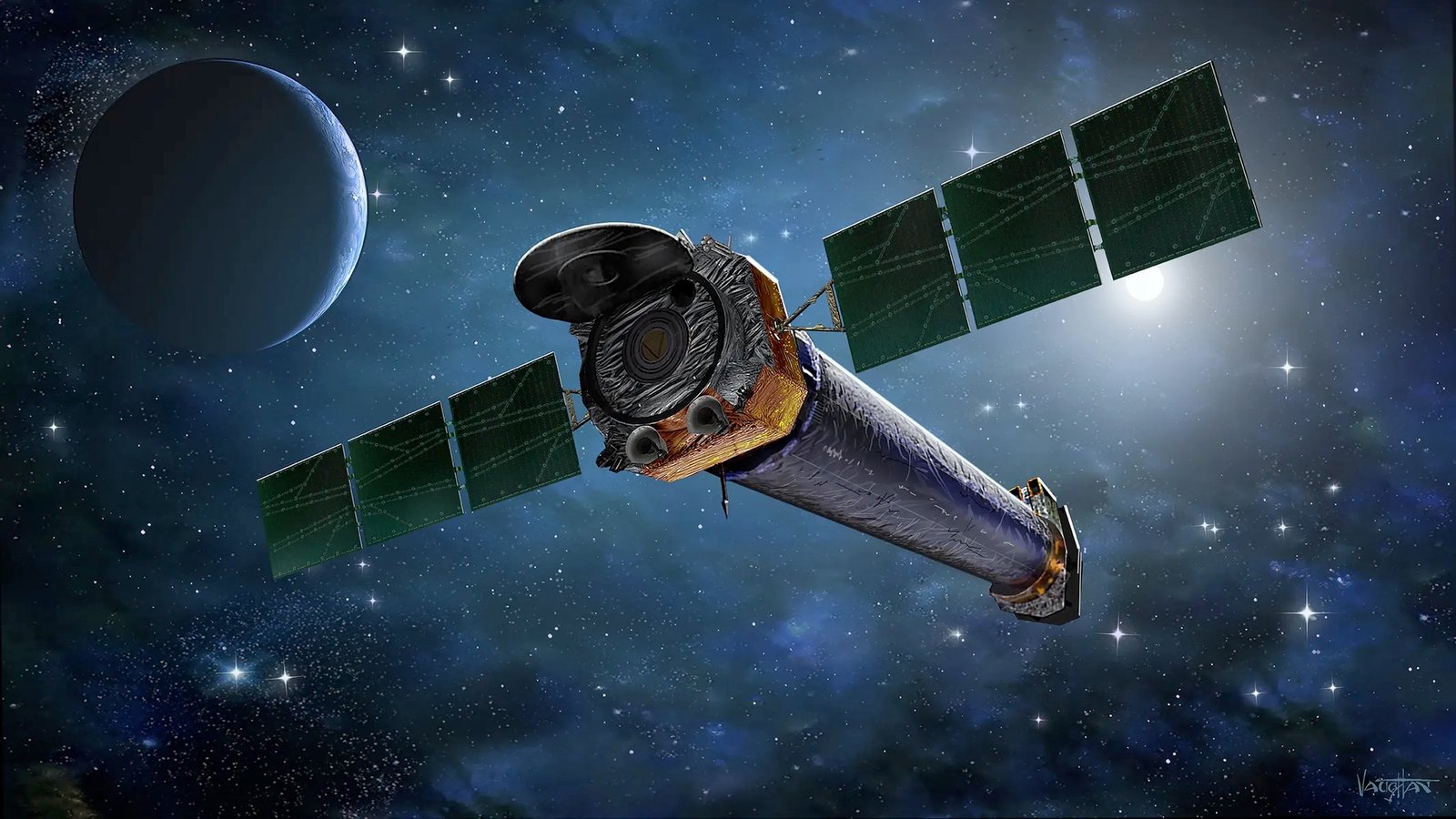
Among the high-profile science missions whose funding was in jeopardy in the administration’s request, but which are funded in the Senate report, include the Mars Odyssey and MAVEN orbiters at Mars, the Juno mission orbiting Jupiter, the New Horizons mission in the Kuiper Belt, the Landsat Next Earth science mission in development and the Chandra X-Ray Observatory.
The budget also funded NASA’s support for Europe’s Laser Interferometer Space Antenna and Rosalind Franklin Mars rover, citing “the importance of NASA upholding its commitments to our international partners,” adding that it expects future NASA budget requests to include funding for those missions.
One major mission not mentioned in the report is Mars Sample Return. The administration’s request sought to cancel MSR, arguing that “current architecture options remain unaffordable.” NASA announced in January that it would study two alternative approaches to MSR, a process it expected then to continue to mid-2026.
The report does not affirm or reject the administration’s proposal to cancel MSR, and it does not set aside any funding for it.
Elsewhere at the agency, the report largely rejects cuts in space technology, providing it with $975 million, below the $1.1 billion in 2025 but above the $569 million in the request. The report includes $110 million for nuclear propulsion programs in space technology that the proposal sought to cancel.
The report funds NASA exploration programs at $7.78 billion, above the $7.67 billion in 2025 although below the request of $8.31 billion. The report includes funding for the Space Launch System, Orion and Gateway, among other programs.
Appropriators used the report to raise concerns about the progress the Artemis lunar exploration campaign is making to return astronauts to the moon. “The Committee remains committed to returning astronauts to the Moon in 2027,” the report stated. “However, spacecraft development and launch delays are eroding confidence that the United States will be the next nation to land humans on the lunar surface.”
The report also expresses support for both the International Space Station and Commercial LEO Development programs in space operations, an account that receives $4.31 billion in the bill compared to $4.22 billion in 2025 but just$3.13 billion in the budget proposal. “The Committee rejects the proposed reduction in the ISS to minimal operations and directs NASA to maintain the fullest possible use of ISS through end of life,” the report states, including a minimum of two crew and four cargo missions annually to the station.
The report also provides $148 million for Science, Technology, Engineering and Mathematics (STEM) Engagement, the agency’s educational programs, which the proposal sought to zero out. STEM Engagement received $143 million in 2025.
House concerns on science funding
Senate appropriators released their report the same day as the release of a letter signed by more than 60 House members they sent to NASA’s current acting administrator, Sean Duffy, expressing worries that the agency will attempt to implement cancellations of NASA science missions before passage of fiscal year 2026 spending bills in Congress.
“We are particularly concerned about alleged internal actions at NASA that could set in motion the proposed FY2026 cuts prior to Congress acting on an FY2026 appropriation for NASA,” the letter stated, such as reports that the agency directed affected missions to develop “closeout plans” for their missions that would be implemented as soon as the start of the 2026 fiscal year on Oct. 1.
The letter noted that “actions to put the FY2026 proposal into practice prematurely would not only be unlawful, they could also circumvent actual Congressional direction for FY2026 appropriations for NASA and how such appropriations are legally required to be spent,” adding that the House and Senate have started to reject those cuts.
While the Senate would keep NASA science funding as the same overall level as 2025, a House bill would provide $6 billion for science, less than the Senate but still significantly more than the White House proposal. House appropriators have not released additional details about their CJS bill, which is scheduled to be marked up by the full committee July 24.
The members who led the creation of the letter — Reps. Valerie Foushee (D-N.C.), Don Beyer (D-Va.) and Seth Moulton (D-Mass.) — emphasized in a statement about it that the letter was bipartisan. However, of the 64 signatories, the only Republican is Rep. Don Bacon (R-Neb.), who co-chairs the Planetary Science Caucus in Congress with Rep. Judy Chu (D-Calif.), another signatory. Bacon recently announced he would not run for reelection in 2026.