
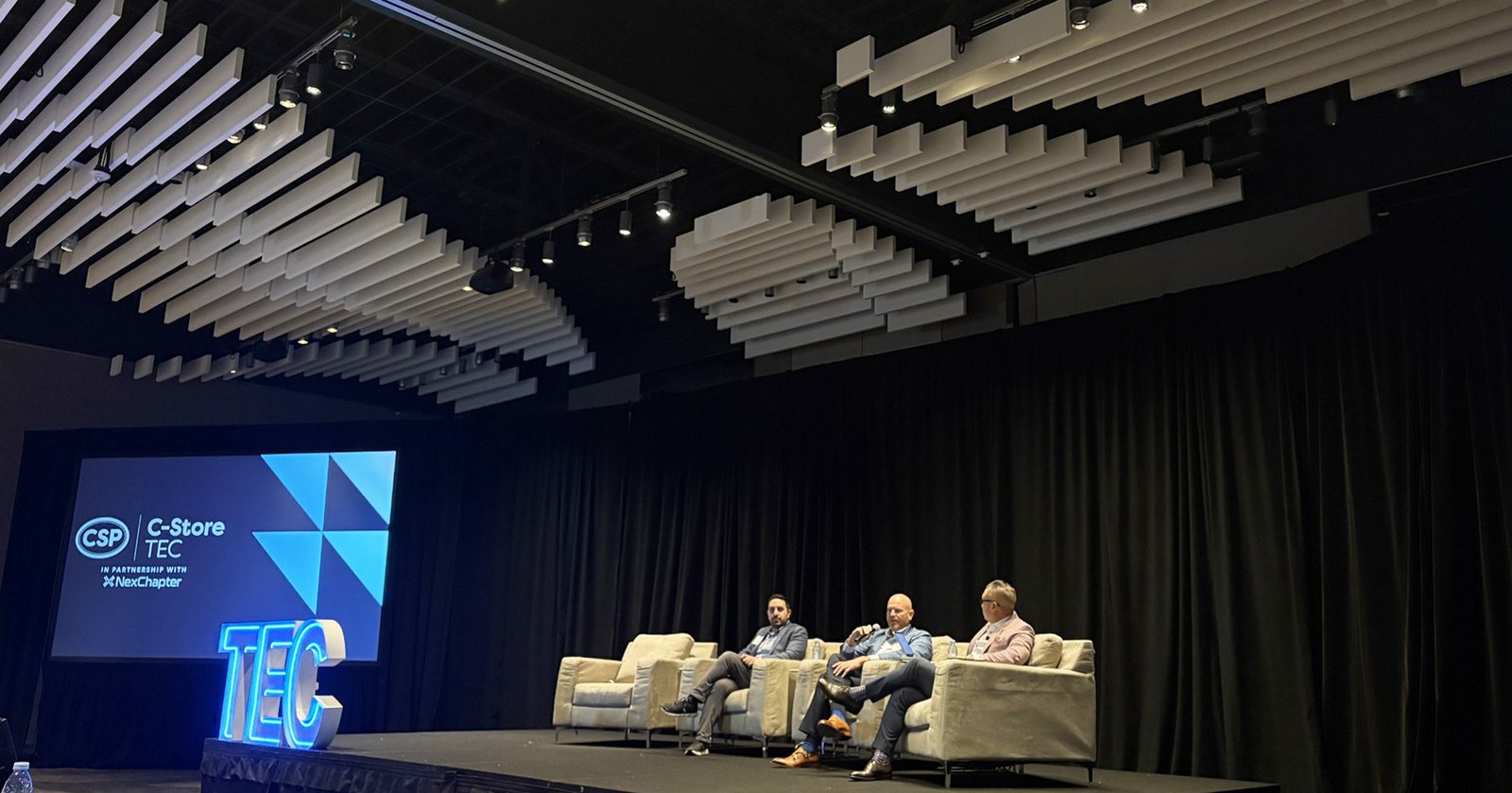

7-Eleven and Refuel are using data and artificial intelligence to improve operations. | CSP Staff
Technology leaders from 7-Eleven and Refuel outlined how their companies are using data and artificial intelligence to improve operations during an education session at C-StoreTEC, held Monday through Wednesday in Plano, Texas.
Yaqub Baiani, head of consumer digital product and design at 7-Eleven, and Justin Mitchell, chief technology officer at Refuel Operating Co., described efforts to build internal systems that consolidate and analyze data to enhance efficiency and performance across their stores.
7-Eleven
7-Eleven is measuring the effectiveness of its 7Now delivery platform, built in-house, against widely used commercial alternatives through a data-driven, experimental approach, Baiani said during an education session.
Supported by its internal data science teams, 7-Eleven has developed proprietary machine learning models to enhance personalization and item assortment for its growing delivery customer base, Baiani said.
“One of the challenges that the product teams and the business face is how good our model is compared to an Amazon or a Google or any of the different models that you can buy off the shelf,” Baiani said.
To answer that, the company’s engineering and product teams collaborated to create an artificial intelligence (AI) gateway that enables side-by-side testing of different machine learning models, Baiani said. The system allows teams to conduct A/B tests across multiple models. It assesses both internally built and off-the-shelf versions to evaluate performance objectively and avoid bias toward internal solutions.
“That’s a great innovation that was actually presented by the engineering team,” he said.
- 7-Eleven is No. 1 on CSP’s 2025 Top 202 ranking of U.S. c-store chains by store count.
Refuel
Refuel is taking a structured approach to improving how it manages and uses data across the organization, Mitchell said during the education session.
The company has focused on addressing challenges around data accessibility and integration by building a centralized data hub. The hub brings together multiple sources of information into a single location. This can include point-of-sale (POS), human resources information system, loyalty, quick-service restaurant (QSR) and enterprise resource planning (ERP) data, including financial transactions, inventory tracking and store operations.
With this consolidated structure, Refuel can now leverage analytics tools such as Power BI, a business analytics tool from Redmond, Washington-based Microsoft used to visualize data and create interactive reports and dashboards. Power BI helps Refuel provide its financial planning and analysis (FP&A) teams with direct access to up-to-date information, Mitchell said.
This eliminates the need for teams to manually gather and merge data from multiple systems, allowing them to run reports and analyze trends more efficiently, he said.
The initiative represents a significant operational shift for Refuel, he said.
Previously, the company relied heavily on its ERP system as the central data source, which limited visibility because certain POS information was excluded. By bringing in all available data, Refuel now has greater flexibility to determine what is valuable and how it should be used, enabling teams to generate insights and reports tailored to their specific business needs, Mitchell said.
- Refuel Operating Co. LLC is No. 38 on CSP’s 2025 Top 202 ranking of U.S. convenience-store chains by store count.
Members help make our journalism possible. Become a CSP member today and unlock exclusive benefits, including unlimited access to all of our content. Sign up here.