
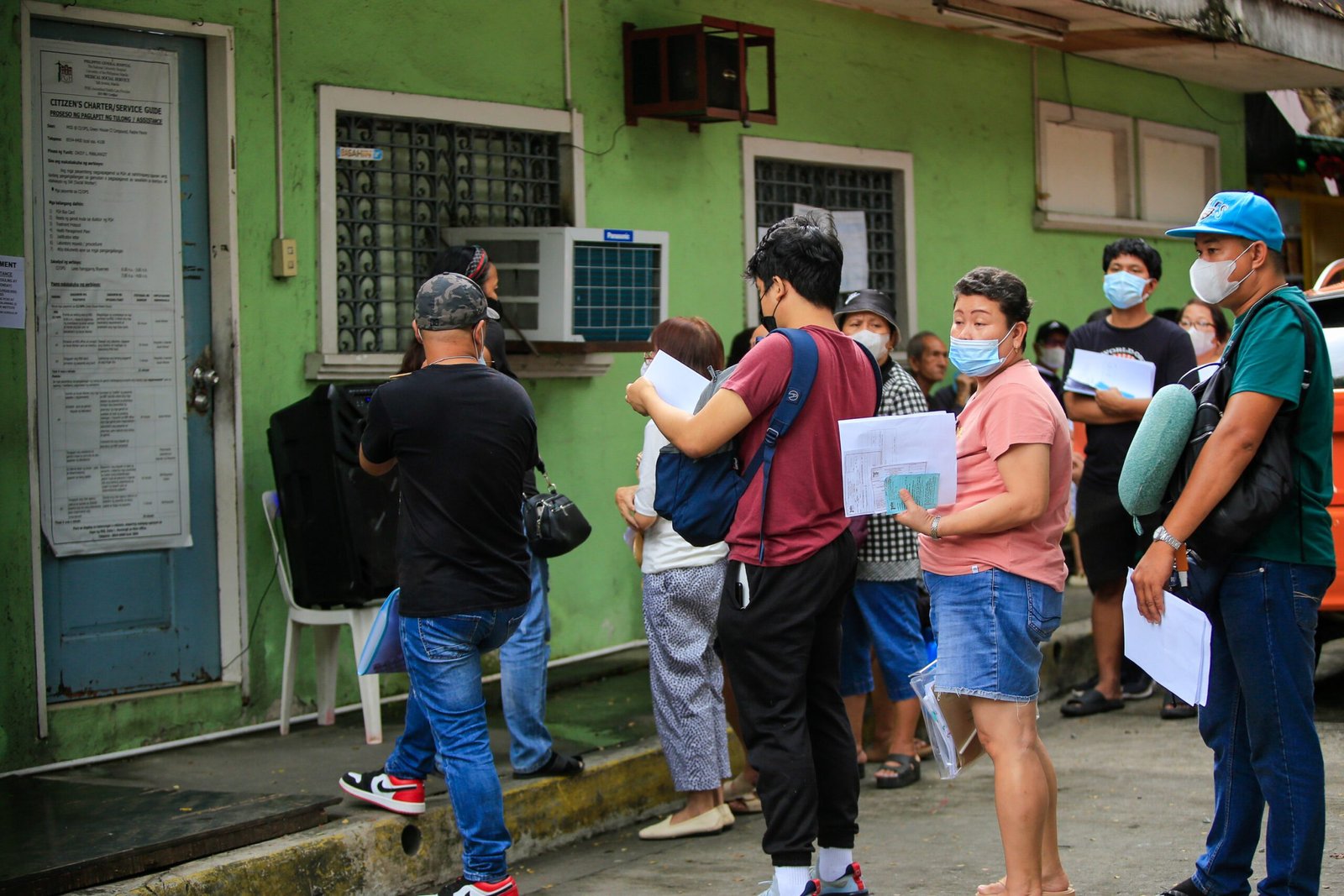
The Philippines is once again gripped by corruption scandals, this time centered on public infrastructure projects. Yet, as we rightfully demand for accountability, we must recognize that the threat runs even deeper and endangers one of our most fundamental public goods: our nation’s health.
Recent calls to probe the Department of Health follow a string of allegations already surrounding health agencies, from the misuse of PhilHealth funds to the Pharmally controversy. Recently, it was revealed that only two hundred super health centers under the Health Facilities Enhancement Program were operational, despite over P170 billion allocated in infrastructure and equipment in the past decade.
These failures are not just a string of isolated lapses. It’s become a tradition. As far back as 2005, the Philippine Center for Investigative Journalism reported that up to 70% of local health funds never reach their intended systems and services — a staggering, persistent loss reveals a system that enables this rot.
Corruption in health does not always make headlines, but it is especially insidious. It manifests in ghost patients and procedures, padded contracts, overpricing, and kickbacks for medicines and infrastructure. Even programs meant to increase medical assistance through “guarantee letters” are usually routed through politicians, reinforcing a cycle of patronage and“pagmakakaawa” (begging or asking for help) that leaves people grateful and indebted for what is rightly theirs by law in the first place.
When public health funds become tools for political gain, people are deprived not just of care but also of dignity.
Importantly, this is not only about the misuse of funds. The deeper danger is in sowing discontent and mistrust so widespread that Filipinos delay or avoid seeking care altogether. What starts as a financial loss evolves into a crisis of confidence, a barrier as deadly as any disease.
This story is not confined to high-profile cases in Manila. Corruption festers at every level and thrives even at the most basic unit of healthcare delivery. Providers inflate bills or overcharge patients. Local officials have been known to delay payments to barangay health workers or manipulate hiring and procurement for personal gain and profit. The devolution of health services, a well-intentioned move to bring resources closer to people, means more budget and decision-making power at the local level. This can be a force for good, but without real checks, it spells disaster for unprepared leaders or becomes prey for entrenched elites.
Nor can we ignore the private sector. Profiteering is made possible when regulation fails. Both public and private abuse have a ripple effect, further fostering widespread distrust and resentment. Health corruption is not only a matter of stolen resources, but stolen hope.
Part of the problem is our willingness to accept damaging myths, such as the assumption that all doctors are wealthy, or that medicine is purely a noble calling rather than a profession deserving of fair support and constructive criticism.
In truth, most health workers — from moonlighting doctors and job-order nurses to barangay nutrition scholars — struggle with inadequate pay, limited resources, and chronically stressful conditions. Expecting them to operate with nothing but self-sacrifice is as unsustainable as it is unjust. Corruption, in many cases, emerges from systemic neglect, not simple greed.
Real change demands more than removing or scapegoating a few bad actors. It means confronting a system that enables this rot, and committing to structural reform on all fronts. And so, beyond our call for health professionals not to look away from the corruption, we need various stakeholders to be involved and take action.
Governments at all levels must make transparency and true accountability a non-negotiable. Appointment to public health posts – from the national Department of Health down to barangay health stations – should be grounded in merit and ethical commitment, not political favors. Instead of just punishing misconduct, incentivizing good performance can motivate government health workers. Leaders must also shift away from headline-grabbing projects, such as building oversized specialty hospitals or distributing health cards, and instead focus on strengthening primary care facilities and referral systems that answer the real needs of their constituents.
It is likewise their duty to institutionalize mechanisms for oversight and inclusion. Local health boards must become genuine venues for dialogue with and input from sectoral representatives. Proven tools, such as participatory budgeting and public social audit platforms, enable communities to see not only where funds are allocated but also the outcomes those funds achieve and the value they deliver. Several local governments have already demonstrated what is possible, and these models should be supported and scaled up nationwide.
The private sector, from private hospitals to pharmaceutical companies, also plays a critical role and bears responsibility in advancing and implementing ethical and equitable practices. The profit motive cannot outweigh public interest. Stronger regulatory enforcement against policies that monitor price gouging, fraud, and overbilling is essential. At the same time, there should be mechanisms to support private sector stakeholders in rejecting and reporting onerous practices that are forced upon them by corrupt government officials.
Development partners and donors must rethink what defines success. Too often, metrics focus on quantitative outputs, such as persons reached or facilities built, while deeper, more meaningful outcomes are overlooked. Aid should be directed toward organizations with genuine intent, respond to actual needs on the ground, and prioritize long-term systems strengthening rather than just short-term, vertical initiatives. Lasting, transformative reform cannot be rushed and requires patience.
Crucially, robust mechanisms are needed to ensure resources reach their intended beneficiaries and are not diverted for political or personal gain. To maximize impact, monitoring and evaluation mechanisms must be strengthened, ensuring that every intervention is purposeful and that assistance is provided to deliver real, lasting change, and not simply for the sake of providing aid.
For their part, professional societies, including the Philippine Medical Association (PMA), the Philippine Society of Public Health Physicians (PSPHP), and the Philippine Nurses’ Association (PNA), are well-positioned to lead reform efforts. These organizations can further their impact by developing and promoting guidelines for ethical conduct, supporting training opportunities, providing safe avenues for reporting concerns, and collaborating with civil society groups and patient advocates to advance transparency and accountability across the sector.
Meanwhile, educators also have a powerful role. Medical, nursing, and allied health professional schools can nurture ethical, socially engaged practitioners by integrating health governance and advocacy into curricula and treating community rotations as core components of training rather than mere add-ons. Encouraging students to participate in healthy policy debates and engage with social issues can facilitate structural, generational change. Hearteningly, some medical schools are already pursuing this direction.
Finally, but most importantly, communities must be recognized, not just as afterthoughts, but as co-owners of the health system. When mechanisms for participation, transparency, and citizen-led oversight are truly accessible, communities can monitor spending, demand better services, and identify gaps or abuses. Patient experience and satisfaction should also be valued as core measures of success, with regular community feedback informing both policy decisions and frontline service delivery.
True empowerment is not limited to consultation. It means giving people a meaningful role in shaping and safeguarding the systems that serve them. It is often said, but also underappreciated, that when citizens are empowered, integrity and responsiveness become the standard.
Like many of our colleagues and fellow Filipinos, we share the frustration and even the sense of demoralization that comes with seeing scandals repeat themselves, seemingly without end. Yet we know that resignation is not an option when too much is at stake. This is not just the well-being of individual patients, but the promise of a better future.
The work of building a genuinely accountable health system cannot and must not fall on any one group alone. It requires the collaboration and vigilance of government leaders, private institutions, professional societies, educators, and, most importantly, the communities they serve. True and lasting progress depends on each sector embracing its role, holding itself and others to account, and refusing to accept corruption as a fact of life.
Breaking from this entrenched tradition of corruption demands that we move past cynicism and resignation, and toward practical, collective action. Only by working together, with accountability and transparency at the center, can we begin to restore public trust and build a health system that serves every Filipino as it should. – Rappler.com
Janine Patricia Robredo, MD, MBA, MS is a Filipina physician and a primary healthcare research scientist at Ariadne Labs, a joint center for health systems innovation at the Harvard TH Chan School of Public Health and Brigham and Women’s Hospital.
Gideon Lasco, MD, PhD is a Professorial Lecturer at the University of the Philippines Diliman, Research Fellow at Ateneo de Manila University, and Takemi Fellow for International Health at the Harvard TH Chan School of Public Health.
![[In This Economy] ‘Is the peace process part of the mandate of PhilHealth?’](https://www.rappler.com/tachyon/2025/02/peace-process-philhealth-february-28-2025.jpg?fit=449%2C449)