
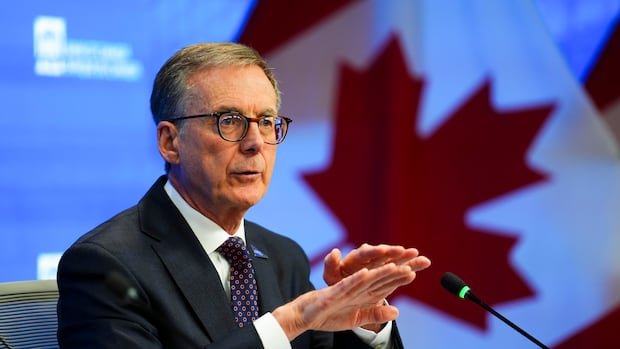
The Bank of Canada lowered interest rates to 2.25 per cent on Wednesday, but cautioned that monetary policy can’t fix the structural economic damage caused by the U.S. trade war.
The central bank said it made the 25-basis-point cut as weakness ripples through the Canadian economy and with inflation expected to stay close to the bank’s two per cent target.
“For many months, we have been stressing that monetary policy cannot undo the damage caused by tariffs,” said Bank of Canada governor Tiff Macklem during a news conference in Ottawa.
The economy has been saddled with higher costs and less income as a result of the U.S. trade war. While the central bank’s monetary policy can help the economy adjust to these circumstances, “it cannot restore the economy to its pre-tariff path,” he said.
Macklem also suggested that if inflation stays in line with the bank’s current expectations — hovering around the two per cent target — the central bank will hold rates at their current level.
However, if the outlook changes, “we are prepared to respond,” he said.
The central bank also released its Monetary Policy Report alongside its interest rate announcement on Wednesday, warning that the trade conflict is “fundamentally reshaping” Canada’s economy.
While the Bank of Canada is lowering interest rates to boost demand in the economy, it faces challenges in doing so, according to Claire Fan, a senior economist at RBC.
If rate cuts stimulate demand in the Canadian economy, there’s a risk that demand outpaces capacity to produce goods — “thereby causing inflation,” she explained.
Weak growth expected
The bank outlined some of the economic conditions that influenced its decision to lower rates.
First, Canada’s economy shrank in the second quarter as exports dropped and businesses made fewer investments because of trade-related uncertainty.
The labour market is still showing weakness and hiring has slowed, with thousands of job losses in industries vulnerable to the U.S. trade war.
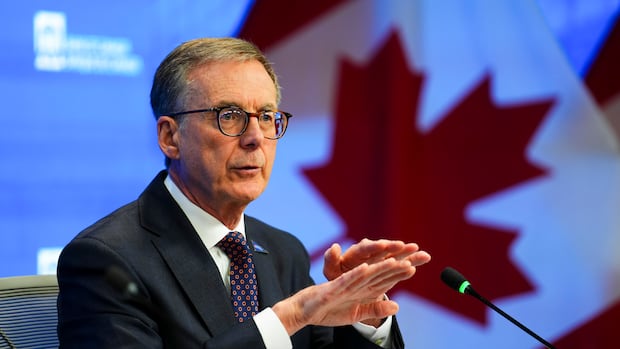
Tiff Macklem, governor of the Bank of Canada, says the role of monetary policy in the current economic situation is ‘somewhat limited’ because it can’t target tariff-hit sectors — and because the current Canada-U.S. trade tensions are not like a typical cyclical downturn.
And because the trade conflict is having “severe effects” on tariff-hit sectors like autos, steel, aluminum and lumber, GDP growth is expected to be weak in the second half of the year, the bank said.
Responding to a question about whether the bank thinks Canada will avoid a recession in 2025, Macklem said that the central bank continues to expect modest growth.
But he emphasized that whether the economy sees a slight pickup or a few quarters of negative growth, Canadians are “not going to feel very good” in either scenario.
Still, consumer spending has grown at a “healthy pace” and is expected to continue growing into the end of the year alongside real estate investment and government spending, according to the bank.
Bank officials expect inflation to stay close to its target in the coming months and that inflationary pressures will ease as well.
While weak economic growth is keeping price increases subdued, tariff-related costs for businesses are putting pressure on inflation, and the bank expects these two forces will offset each other.

(CBC)
Rates are ‘at about the right level’
The bank said in its release that if inflation and economic growth evolve “broadly in line” with its current projections, it considers the current rate “at about the right level” to keep inflation on target while guiding the economy through a period of change.
If the outlook changes, the bank could change course. Asked what kind of material change the central bank would need to see, Macklem quipped, “I’ll tell you when we see one.”
“It’s not one month of data that shows some shift,” he added. “You need to see some accumulation of evidence that you’re coming in below that forecast … enough that it actually changes your outlook of the future.”
Central bank officials seem to believe that, for the time being, they’ve cut rates enough to stimulate the economy, said Robert Kavcic, senior economist at the Bank of Montreal.
“From here on out, in their opinion, it’s kind of up to fiscal policymakers to take the baton and support some areas of the economy that have been impacted by the trade war,” noted Kavcic.
When it comes to direct fallout from the trade conflict, including job losses, “further rate cuts aren’t going to really do anything to help that situation in the really short term,” he added.
“So that’s somewhere where fiscal policy would step in with maybe direct and targeted support.”
Kavcic’s view is that ongoing weakness in the labour market leaves the door open for the central bank to make another 25 basis point rate cut in early 2026.
“But for the very immediate future, they’re not there,” the economist added.
The Bank of Canada will announce its next interest rate decision on Dec. 10.