
A $900 million emergency plan to continue food assistance for roughly 1.4 million Michiganders is being proposed by state House Democrats.
Those residents, who include nearly 492,000 children in the state, are slated to be cut off from Supplemental Nutrition Assistance Program (SNAP) benefits in November as the federal government shutdown continues.
SNAP, formerly known as food stamps, provides food assistance to those who are lower-income. Nearly 13% of Michigan households rely on SNAP to buy groceries.
The U.S. Department of Agriculture last week notified Michigan and other states that benefits from SNAP will be paused for the month of November. Rather than directing states to issue partial benefit payments, the federal government told Michigan to “hold November SNAP issuance.”
The plan proposed Tuesday, Oct. 28, by Michigan House Democrats would use lapsed project dollars to create a new $900 million SNAP Fund backfilling the lost federal dollars and allowing the program to remain temporarily operational.
Michigan would not be reimbursed by the federal government if the state’s elected leaders chose to use state dollars to continue SNAP benefits, according to a USDA memo obtained by Axios.
In that memo, USDA officials said there is no provision under current law for states to cover the cost of the benefits and be reimbursed.
House Democrats said the state budget director would determine which work projects the dollars for the SNAP Fund would be taken from. House Democrats said Michigan would be able to use additional state funds on SNAP and disburse those benefits during the pause, as the federal pause order only applies to federal dollars.
House Speaker Matt Hall, R-Richland Township, did not immediately return a request for comment.
One of the bill package sponsors, state Rep. Tonya Myers Phillips, D-Detroit, said President Donald Trump’s administration and Republicans in Washington are jeopardizing the food security of those who rely on SNAP benefits.
“This is not just unacceptable, it’s inhumane. The provision of food should not be a political issue,” Myers Phillips said. “As state lawmakers, we must quickly collaborate with our constituents, nonprofit and faith-based food providers, and retailers to ensure Michiganders have access to adequate food, especially as we approach the winter season and the holidays, while food prices continue to rise.”
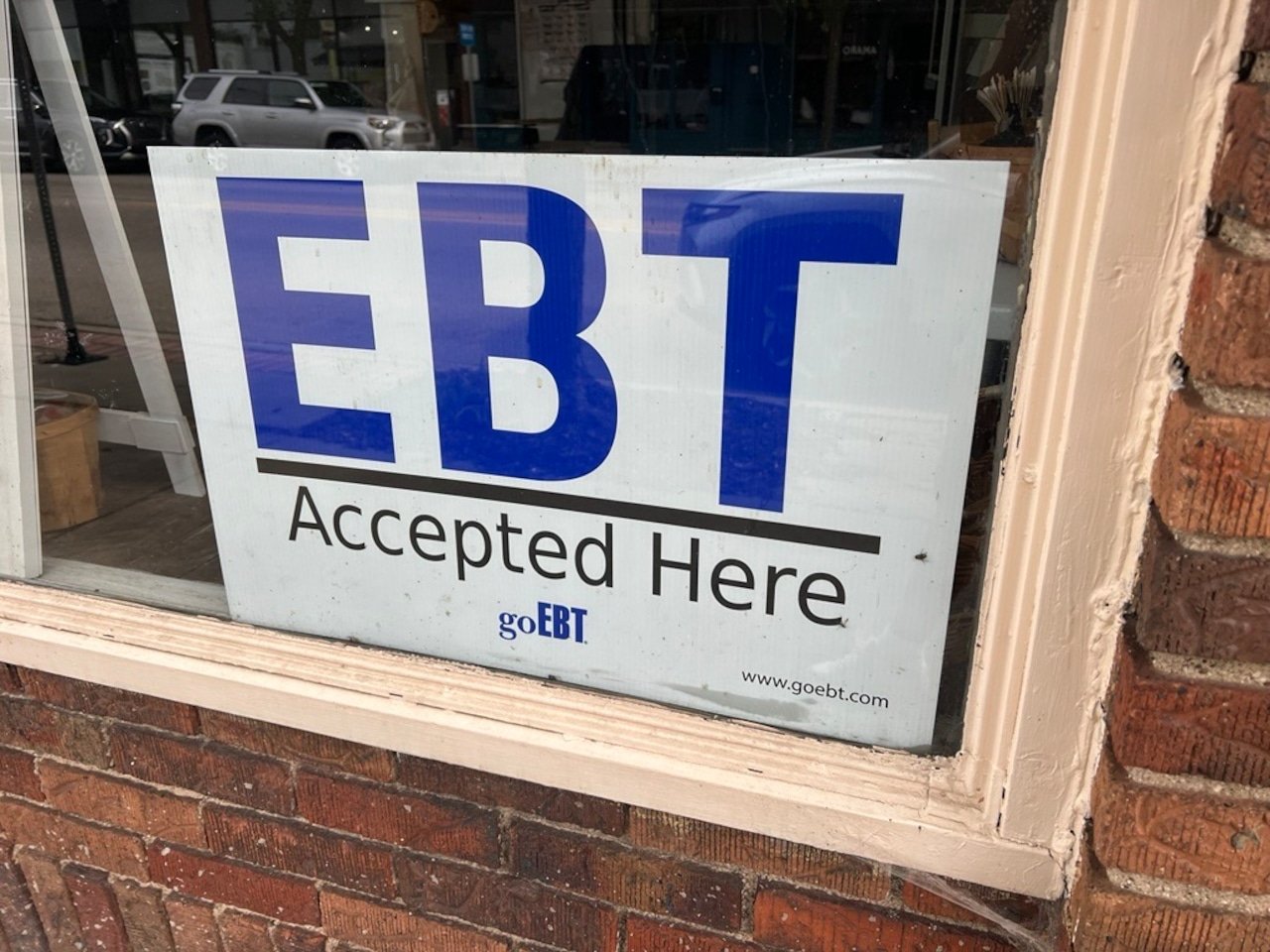
The average eligible household in Michigan received $335 in monthly SNAP benefits last year. About half of SNAP households have a person with a disability and 43% have children. Benefits are put on debit cards, known as electronic benefit transfer (EBT) cards, that can be used to buy food at grocery stores, farmers markets and other retailers.
“For millions of Michiganders, the SNAP program provides the small amount of relief needed to take one financial worry off their plate, and put food on it instead,” said another of the bill sponsors, state Rep. Kimberly Edwards, D-Eastpointe. “As state legislators there are limits to what we can do to offset the impact a Republican-controlled federal government has on Michigan, but whatever those limits may be, we have a responsibility to reach them.
“Food is one of our most basic human needs, and taking access to it away from 1.4 million Michiganders is unconscionable. We have an obligation to try every option available to stop this from happening.”
The proposed SNAP Fund is part of a five-bill package aimed at mitigating the effects of a SNAP benefits pause and restoring federal funding to the program.
Those efforts include allocating $12.5 million to the Food Bank Council of Michigan to help keep food banks stocked and $12.5 million to food pantry programs around the state.
Lawmakers are also proposing a resolution to urge President Donald Trump, federal lawmakers and the USDA to immediately reopen the federal government or at least ensure SNAP benefit distribution continues uninterrupted.
Another resolution would urge the USDA to use its contingency fund to continue SNAP benefits without interruption. House Democrats said the department did this during the 2019 federal government shutdown.
Michigan Attorney General Dana Nessel on Tuesday joined 22 other attorneys general and three governors in suing the USDA for what they say is an unlawful suspension of SNAP benefits.
About 42 million people in the U.S. receive SNAP benefits, and the program totals about $100 billion in funding.
The federal government shutdown began Oct. 1 when Congress failed to pass either a temprorary or full spending bill for the new fiscal year.
Democrats and Republicans in Washington continue to blame each other for the partisan standoff. That dispute involves Democrats preventing a spending bill from being passed until Republicans agree to continue subsidies for the Affordable Care Act, also known as Obamacare.
On Tuesday, the U.S. Senate failed for a 13th time to pass a GOP House bill that would’ve ended the shutdown.
In addition to Myers Phillips and Edwards, the bill package is sponsored by state Reps. Betsy Coffia, D-Traverse City, Reggie Miller, D-Van Buren Township, and Denise Mentzer, D-Mount Clemens.
If you purchase a product or register for an account through a link on our site, we may receive compensation. By using this site, you consent to our User Agreement and agree that your clicks, interactions, and personal information may be collected, recorded, and/or stored by us and social media and other third-party partners in accordance with our Privacy Policy.