
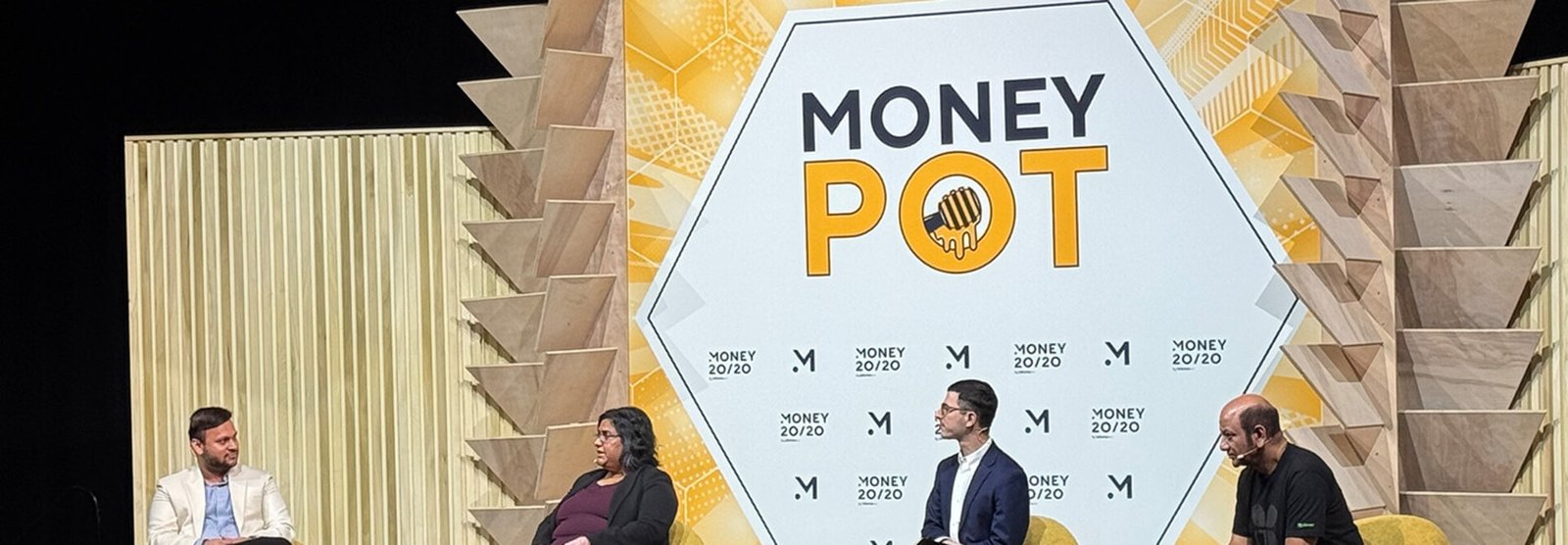
Ackerman expressed optimism for the use of agentic AI at Stripe. “We certainly hope that agentic commerce grows into the killer use case. I would say, right now, we’re just at the beginning of what agentic commerce is and can do.”
Currently, Ackerman said Stripe are working closely with OpenAI on an instant checkout system and with platforms such as Etsy and Shopify to enable their sellers to exchange goods and funds through ChatGPT. “But we think that this ecosystem is really just on the verge of burgeoning and growing quite quickly.”
Ackerman said Stripe is also hard at work “trying to understand what it means to underwrite trust across the financial ecosystem at large and across the internet. We’re building some new technology called shared payment tokens. And the reason why this is so critical for us is because, in the past, we relied on the fact that you, as a consumer, you are also a cardholder, and you’re using that credential to make a secure transaction. But in this brand-new kind of unchartered, agentic world, what’s happening now is we have agents that are using the web to make purchases on your behalf.” This new form of payment creates new challenges around security, identity and trust.
DIG DEEPER: Uncover some best practices for agentic artificial intelligence in financial services.
What Does the Future Hold for AI in Financial Services?
While all of the panelists agreed that AI will play a central role in the future of financial services, each had a specific element of AI they see as a critical component. Seetharaman said, “I think we’re thinking about individual use cases and product-level innovation right now. Once we get the framework for agentic AI across the ecosystem and at the enterprise level right, the ability to reimagine the entire banking value chain and truly look at transformative opportunities is exciting.”
Ackerman said he and his colleagues at Stripe are excited about empowering AI agents in commerce. “We think that this is going to be a really meaningful shift in how the world does business online. And to that point, we’re really excited about what it means and looks like to underwrite trust. And this is not just for payments but it’s underwriting trust across the entire internet ecosystem.”
Finally, Saraf echoed the excitement of his fellow panelists. “We’ve come from the exciting phase of Metaverse to something that I think is far more real enough. But I think there are three arcs that we are converging in this new, intelligent finance as I see it going forward.”
The first arc he identified is an agentic ecosystem that all of us will contribute to, whether at the checkout space, the account registration space or the underwriting space. The second arc is what Saraf called “the programmable movement of value or liquidity that I think this agent ecosystem will truly help transform.” And finally, he said, the third arc is about contextual identity and personalization. He emphasized the need for trust to be built into it.
“These three arcs are truly converging to create something pretty transformational,” Saraf concluded. “I think that this science, finally, is bringing a significant level of inclusivity, and really empowering not just the consumer but also the small and medium businesses in the same way it empowers the Fortune 500. So, we’re really in a very interesting time, for sure.”
Keep this page bookmarked for articles from the event, and follow event highlights and behind-the-scenes moments on the social platform X @BizTechMagazine and @money2020.