


New Orleans City Council holds an emergency meeting with the Cantrell administration Oct. 22, 2025.
Oct. 29 will be a make-or-break day for the New Orleans City Council as leaders work to stave off a looming state takeover in response to the city’s deepening financial crisis that threatens to leave thousands of employees as well as vendors and other contractors without pay for much of the next two months.
Gov. Jeff Landry on Oct. 28 called on the State Bond Commission to reject the City Council’s request for a short-term $125 million loan to bridge the funding gap and began the process of taking over the city’s finances, and by extension the city’s government.

The council on Oct. 23 requested the loan after Mayor LaToya Cantrell’s administration acknowledged it was facing a $160 million funding shortfall this year. That shortfall appears to be the result of mismanagement, rampant overtime spending and hundreds of millions of dollars in uncollected debts owed the city.
Although the commission is largely made up of Landry and Republicans loyal to him, Mayor-elect and Council Vice President Helena Moreno and Council President JP Morrell had come into the week optimistic they had marshalled enough support for the loan to be approved.
But Landry’s social media post announcing his opposition to the loan made approval much more unlikely.
As a result, the council Wednesday morning will hold an emergency meeting to take up a series of ordinances creating rigid guardrails around how money can be spent, including limiting Cantrell’s ability to move already appropriated funds around and restricting deficit spending, among other things.
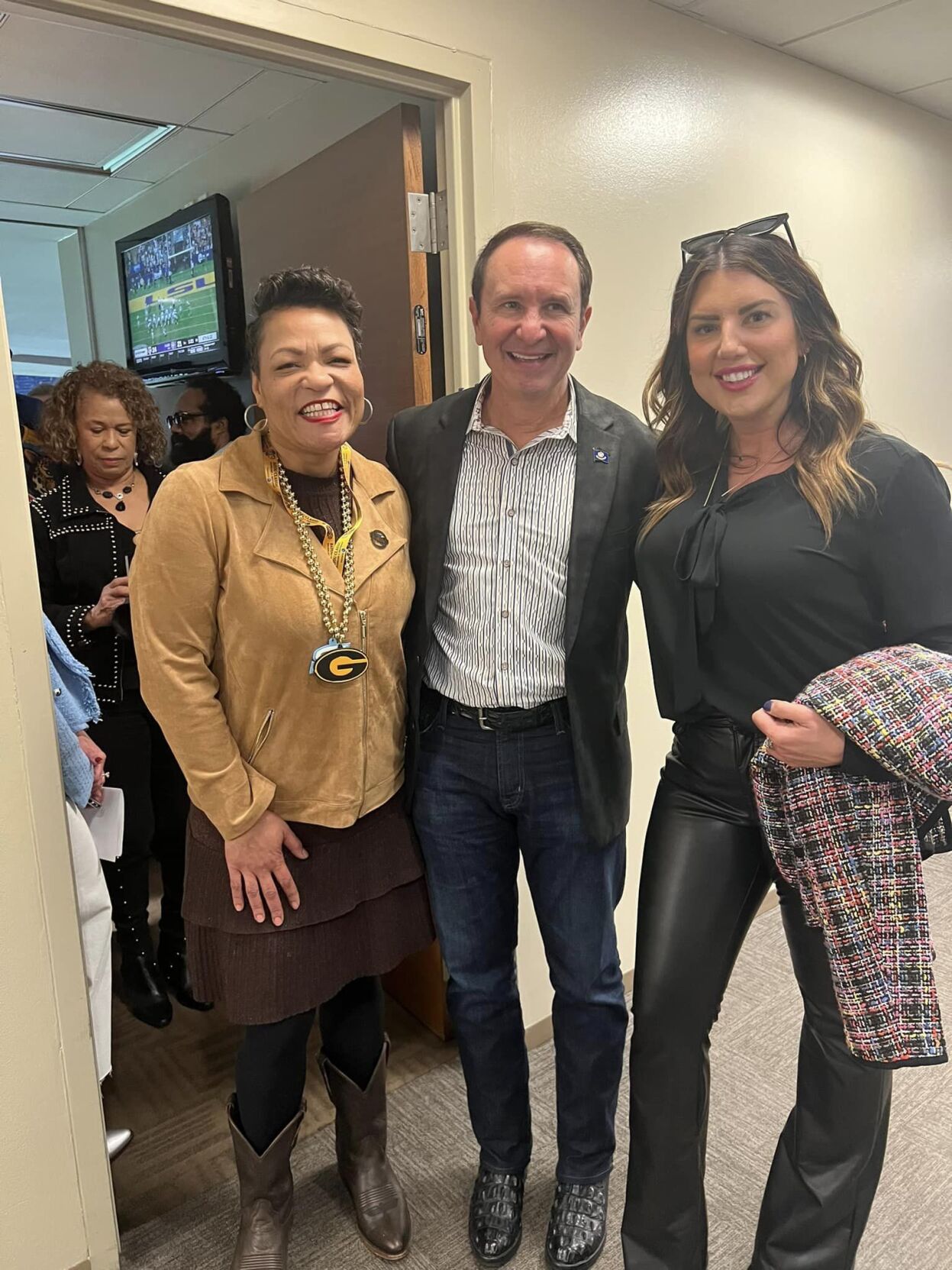
Gov. Jeff Landry, center, seen here in happier times with Mayor LaToya Cantrell
The hope, according to multiple sources familiar with the situation, is that those ordinances will demonstrate the council is being proactive about fixing the city’s financial problems.
Then later in the day, Morell and Moreno will head to Baton Rouge for an emergency meeting of the state’s Financial Review Committee, which is made up of Legislative Auditor Michael Waguespack, State Treasurer John Flemming and Attorney General Liz Murrill, where they’ll make the case for not moving further along the process of a state takeover. The Bond Commission is expected to meet the following day, Oct. 30.
The emergency hearing, which Landry requested Oct. 28, is the first step towards installing a GOP-appointed “administrator” over the city’s finances. The mayor would continue to serve, and the council would still be able to pass ordinances, but without the ability to pay for things their actual roles in governance of the city would be severely limited, making the administrator the de facto leader of government.
How long that process would take is unclear. The city would almost certainly challenge it in court, and those proceedings could take months to resolve. If the short-term loan were to remain blocked during that time, thousands of city employees, including the police and fire departments, could either be furloughed or go without pay for weeks or months.
In addition to the direct effect on employees and their families, it would have a broader impact on the city’s economy. The city government is, after all, one of the largest employers in New Orleans. It could also make event organizers consider not coming to New Orleans or cancel planned upcoming conventions, concerts and other events if it appears the city can’t provide basic services.
The threat of tourism economy effects, however, could work in the city’s favor. More than 50 percent of sales tax collected in the city goes to the state, as does a huge part of hotel taxes and other government revenues directly related to tourism. Those funds make up a significant portion of the state’s revenues every year, so anything that could put that in jeopardy could give Republicans in Baton Rogue pause.