
GRAND RAPIDS, MI – State elected leaders are trying to pull together a plan that would continue food assistance for roughly 1.4 million Michiganders, just days before a Nov. 1 deadline.
Attorney General Dana Nessel has sued President Donald Trump’s administration in response to an announcement that – starting next month – it will cut off Supplemental Nutrition Assistance Program (SNAP) benefits as the federal government shutdown continues.
A message topping the USDA’s website reads, “the well has run dry.”
SNAP, formerly known as food stamps, provides food assistance to those who are lower-income. Nearly 13% of Michigan households rely on SNAP to buy groceries.
Gov. Gretchen Whitmer has also made a direct appeal to Trump, calling for a reallocation of federal funds to keep SNAP going.
And state lawmakers in both chambers introduced legislation this week that would reallocate state funding to temporarily cover the program’s cost.
“It’s our money,” Nessel said on Thursday, Oct. 30, speaking at an event in Grand Rapids about how federal tax dollars return in the form of funding programs.
Last week, the U.S. Department of Agriculture (USDA) notified Michigan and other states that benefits from SNAP will pause for the month of November.
Instead of directing states to issue partial benefit payments, the federal government told Michigan to “hold November SNAP issuance.”
The notification came several weeks after the government shutdown began Oct. 1, when Congress failed to pass either a full spending bill or temporary funding resolution for the new fiscal year.
Democrats and Republicans in Washington continue to point fingers for who’s to blame for the standoff. It involves Democrats preventing a spending bill from being passed until Republicans agree to continue healthcare subsidies through the Affordable Care Act, also known as Obamacare, that are set to expire at the end of the year.
On Tuesday, the U.S. Senate failed for a 13th time to pass a GOP House bill that would’ve ended the shutdown.
The same day, Michigan Attorney General Dana Nessel joined 22 other attorneys general and three governors in suing the USDA for what they say is an unlawful suspension of SNAP benefits.
They say during previous federal government shutdowns, SNAP benefits have never been interrupted. And despite the federal government’s claim that it has insufficient funds, the agency has access to billions in contingency funds appropriated by Congress.
A memo issued by the USDA says contingency funds are “not legally available,” and Republicans in Congress have pointed to legal analysis arguing that emergency funds cannot be used because they are “finite” and must previously have been appropriated.
“Emergency funding exists for exactly this kind of crisis,” Nessel said. “If the reality of 42 million Americans going hungry, including 1.4 million Michiganders, isn’t an emergency, I don’t know what is.”
Nessel told press that every day of paused SNAP benefits could have a big impact, especially when coupled with federal funding cuts to food banks across the state.
“I just want to remind people, the federal government, they are not our benevolent overlords,” Nessel said. “We pay taxes to the federal government here in Michigan… it goes to the federal government and comes back to us by the way of programs like SNAP.
“This is our money, and we just want the federal government to give us our money that was congressionally appropriated,” Nessel said.
On Thursday morning, she said arguments on the lawsuit were beginning in a Massachusetts court, and a temporary order requiring the funds to be disbursed could come soon.
The Washington Post reported on Thursday afternoon that a federal judge indicated she would probably order the Trump administration to use reserves and partially fund food assistance, potentially delaying the cutoff. A ruling is likely to come at some point Thursday.
After any movement on the SNAP lawsuit, it would still take around three days for the federal government to disburse any funding from the states, Nessel’s team said.
Nessel said she’s hopeful a ruling would also make it easier for the state legislature to approve its own SNAP continuation funding.
Michigan would not be reimbursed by the federal government if the state’s elected leaders chose to use state dollars to continue SNAP benefits, according to a USDA memo obtained by Axios.
In that memo, USDA officials said there is no provision under current law for states to cover the cost of the benefits and be reimbursed.
On Thursday, the state Senate approved putting $71 million towards helping feed families, in a supplemental funding bill approved by a 27-4 vote.
The bill now heads to the House for consideration. Because of a five-day layover rule, the House is not able to immediately consider the bill for passage.
Earlier in the week, on Oct. 28, state House Democrats announced they would introduce a plan to use lapsed project dollars and create a new $900 million SNAP Fund, backfilling lost federal dollars and allowing the program to remain temporarily operational.
The fund is part of a five-bill package aimed at mitigating the effects of a SNAP benefits pause and restoring federal funding, along with allocating $12.5 million to the Food Bank Council of Michigan to help keep food banks stocked and $12.5 million to food pantry programs around the state.
Several other states, including Minnesota, have announced they would also repurpose state funds to keep SNAP going.
The House bills are also being formally introduced Thursday. Republican House Speaker Matt Hall hasn’t yet said if he’ll consider that package when it is.
His office did not return multiple requests for comment about the House’s package, and did not immediately return a request for comment about the Senate’s.
The average eligible household in Michigan received $335 in monthly SNAP benefits last year.
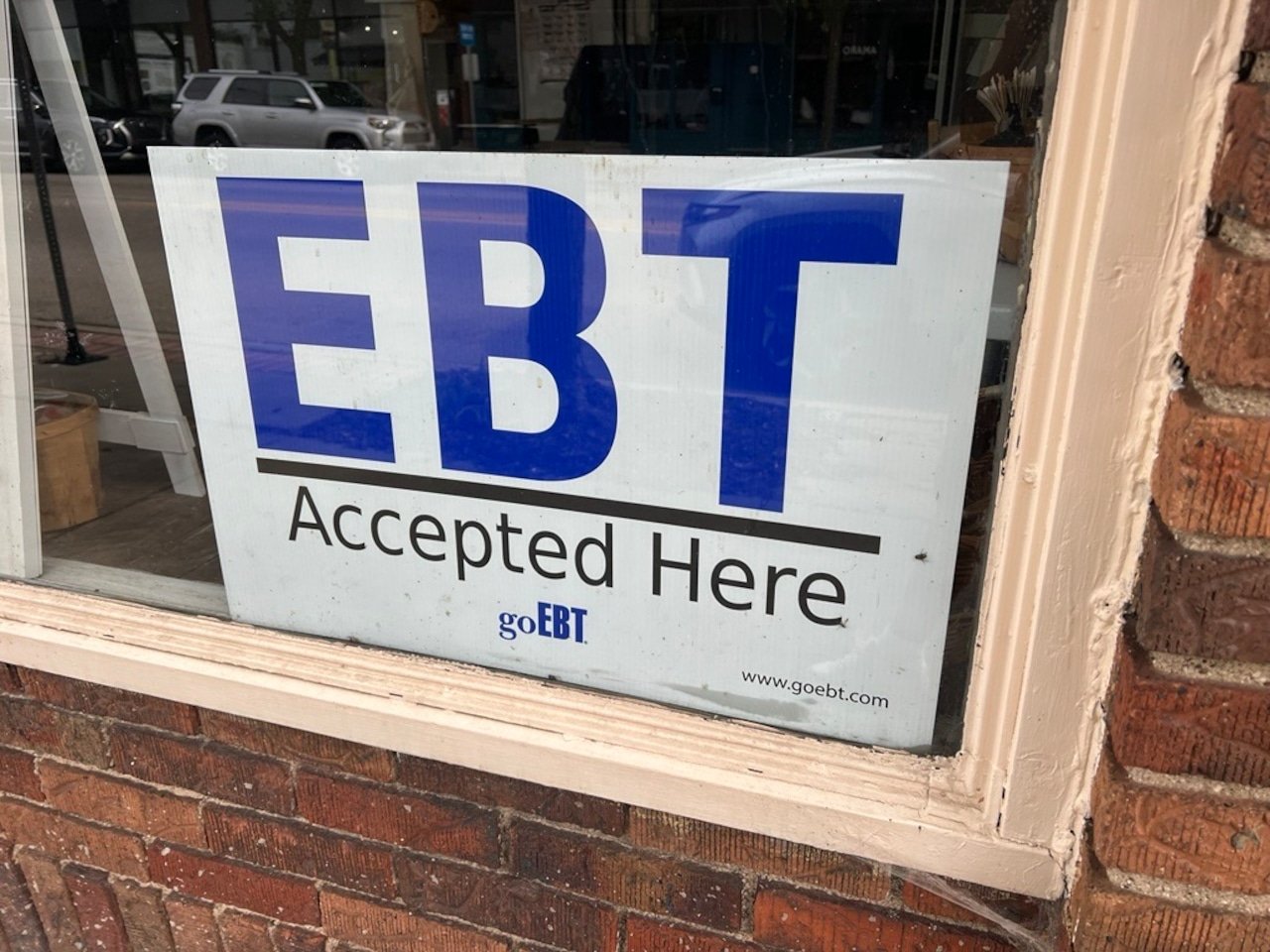
About half of SNAP households have a person with a disability and 43% have children. Benefits are put on debit cards, known as electronic benefit transfer (EBT) cards, that can be used to buy food at grocery stores, farmers markets and other retailers.
Nessel said 78% of Michigan SNAP households include someone with an earned income.
About 42 million people in the U.S. receive SNAP benefits, and the program totals about $100 billion in funding.
On Thursday, Oct. 30, Whitmer and 20 other Democratic governors also sent a letter to President Donald Trump calling on his administration to prevent SNAP disruptions.
“Halting SNAP benefits will put millions of Americans at risk of hunger and poverty,” Whitmer said. “SNAP is more than just a food assistance program, it’s a lifeline. It helps families put nutritious food on the table, supports local farmers and grocers and strengthens our communities and economy.”
If you purchase a product or register for an account through a link on our site, we may receive compensation. By using this site, you consent to our User Agreement and agree that your clicks, interactions, and personal information may be collected, recorded, and/or stored by us and social media and other third-party partners in accordance with our Privacy Policy.