
October 31, 2025 | 1:12pm
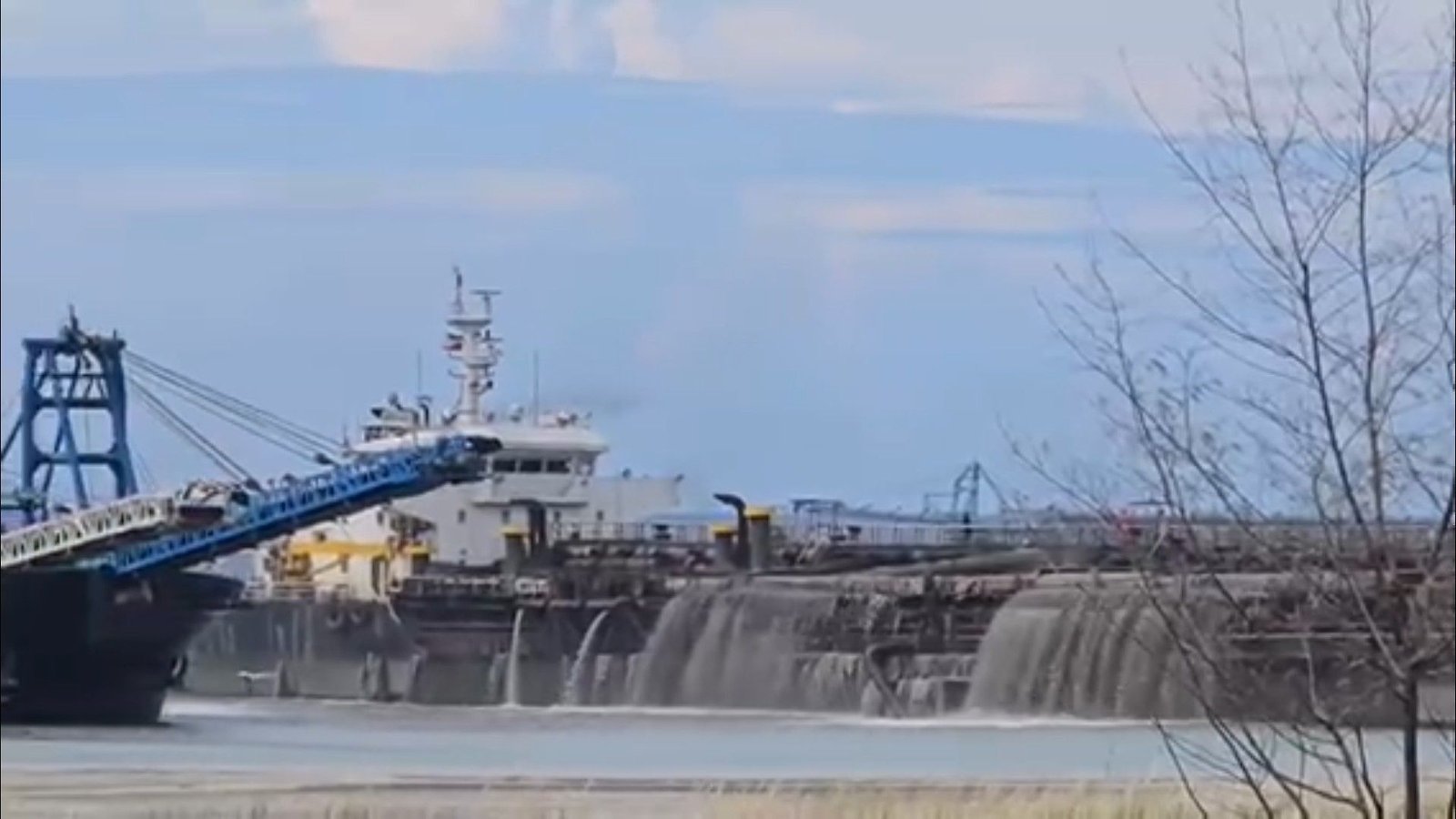
MANILA, Philippines — A fisherfolk group has flagged an alleged mass dredging project by a Chinese company on the shores of San Felipe, Zambales.
In a statement, the Pambansang Lakas ng Kilusang Mamamalakaya ng Pilipinas (PAMALAKAYA) alleged that the firm behind the dredging project is the China Harbour Engineering Company Ltd.
“This unregulated sands extraction has resulted in significant losses to daily income of coastal residents, and worsened the vulnerability of fishing communities to erosion, sea-level rise, among other geological hazards,” said PAMALAKAYA Secretary General Salvador France in a statement.
”The Chinese company, the local and provincial government, as well as government agencies that approved this project are accountable to the affected residents and the environment,” he added.
The Chinese firm in question is a subsidiary of China’s state-owned Communications Construction Co, a company that has been placed in the US Department of Commerce’s Entity List for its construction of artificial islands in the West Philippine Sea.
The fisherfolk group said that the dredged materials will be transported to Manila Bay in Pasay City.
Together with environmental group Zambales Ecological Network, PAMALAKAYA said that it will file a formal complaint about the dredging operations at the House Committees on Natural Resources, and Aquatic and Fisheries Resources.
The groups are seeking a probe into the environmental and socio-economic impacts of dredging.
The United States National Oceanic and Atmospheric Administration explained that dredging is the removal of sediments and debris from the bottom of water bodies.
Several circumstances necessitate dredging, including the maintenance of waterways for ships, as well as the cleaning of pollutants in bodies of water surrounding cities.
However, environmental groups have flagged that excessive dredging can lead to environmental harm, particularly the destruction of marine life.
The Department of Environment and Natural Resources-Mines and Geosciences Bureau also explained that dredging could lead to changes in water depth, thereby altering the strength of waves. This means that coastlines affected by dredging could experience higher waves over time.